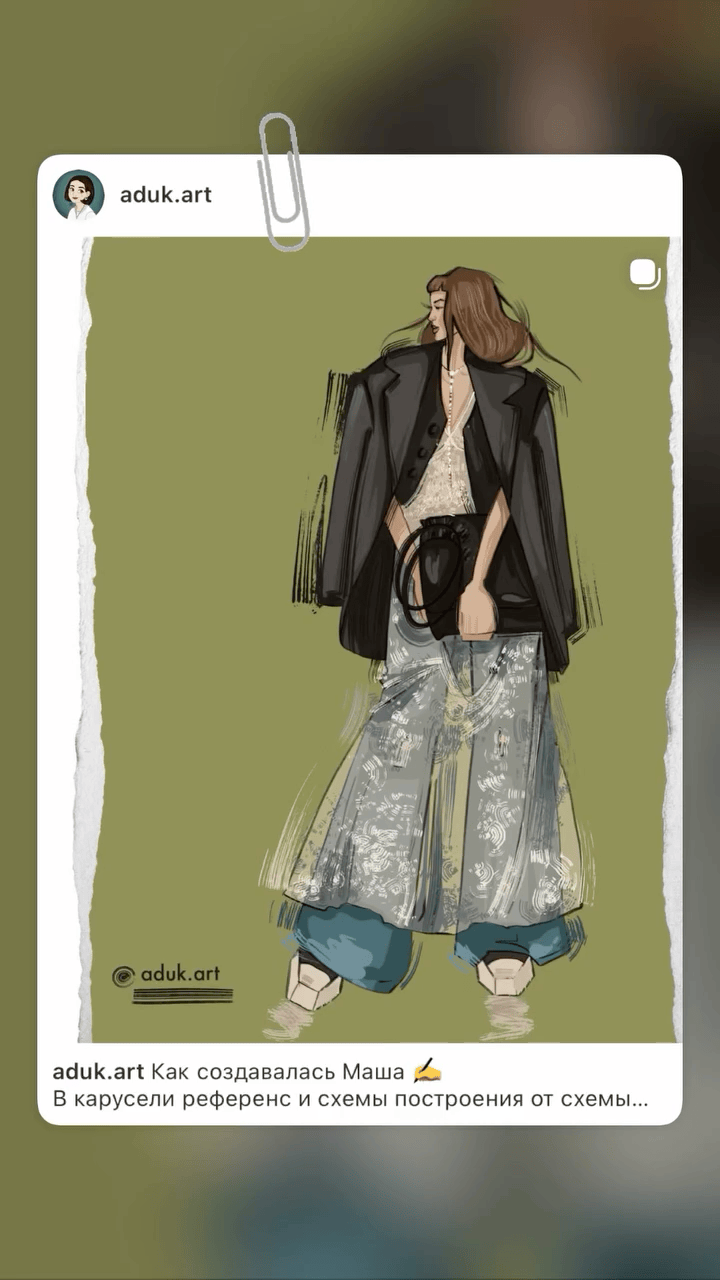

Behind the Scenes of a Digital Fashion Illustration: How Masha Was Drawn
Some works carry a little more gratitude inside them than others.
This portrait of Masha became special to me not only because of the image itself, but because Masha is also an illustrator I once learned from. In a way, this piece feels like a quiet return to that time – to observation, study, and the careful love of form. Drawing her was not only about creating a fashionable figure in a beautiful outfit. It was also about returning to the source of learning, and letting admiration turn into a gentle, personal work.
At first, the illustration existed only as a structure. Before color, before texture, before the mood of the finished piece, there were anatomical layouts, construction lines, and proportion studies. I wanted the pose to feel natural, elongated, and calm, so I built it step by step: the central axis, the tilt of the shoulders, the balance of the hips, the rhythm of the legs, the direction of the head. These simple schemes may look technical, but for me they are one of the most intimate parts of the process. They are the quiet bones of the drawing.

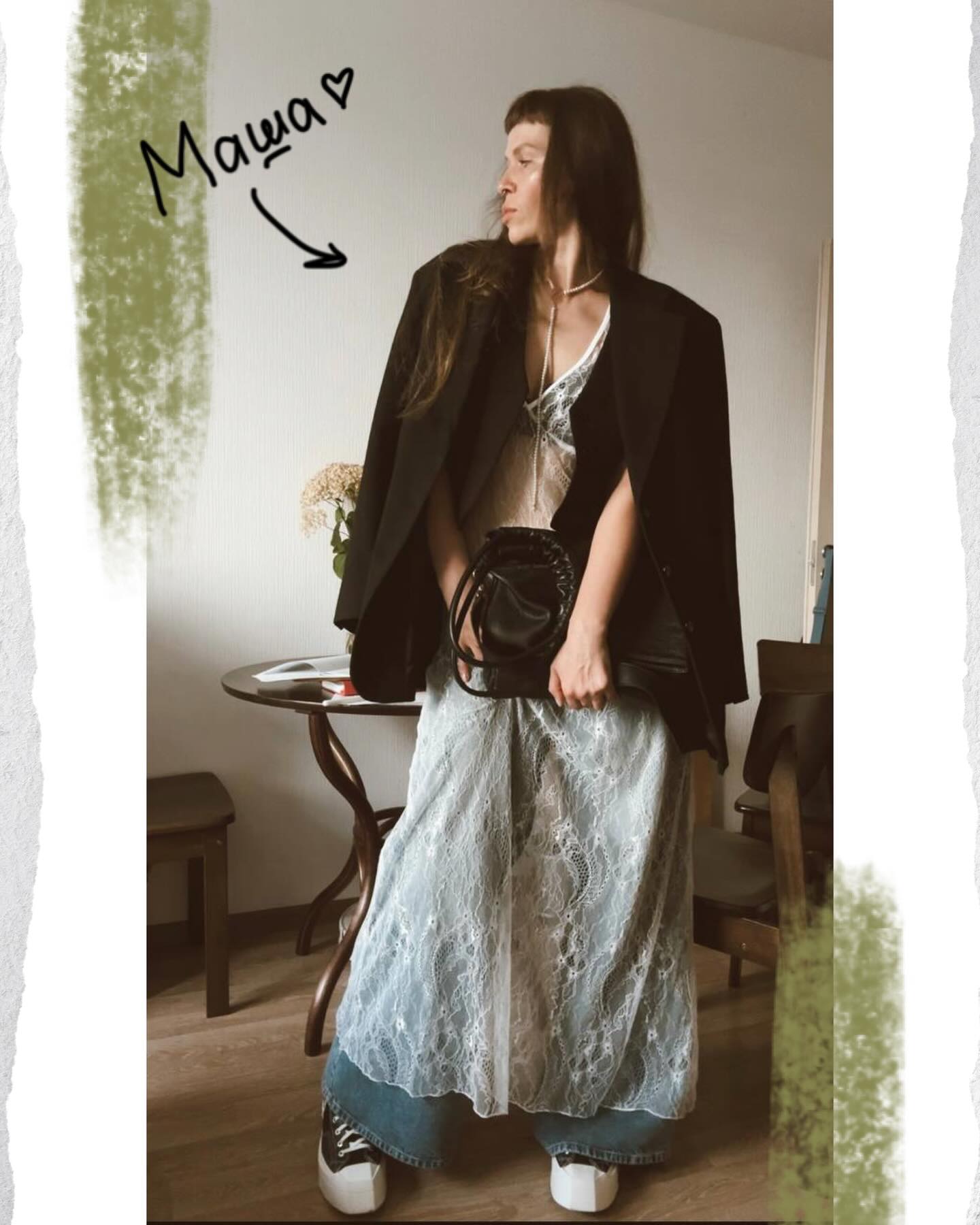
This behind-the-scenes process is a reminder that beauty in illustration is often built very quietly — through study, patience, and many invisible decisions. And sometimes, even a sketch can become a small thank-you to someone who once helped you see drawing differently.
In the final piece, I kept the palette muted and warm so the silhouette and textures could speak softly. For me, fashion illustration is never only about clothing. It is always about the person inside the shape, and the feeling they leave behind. That is why this work naturally connects to custom portrait illustration too: even when the drawing begins with style, fabric, and gesture, it still ends in something deeply human.
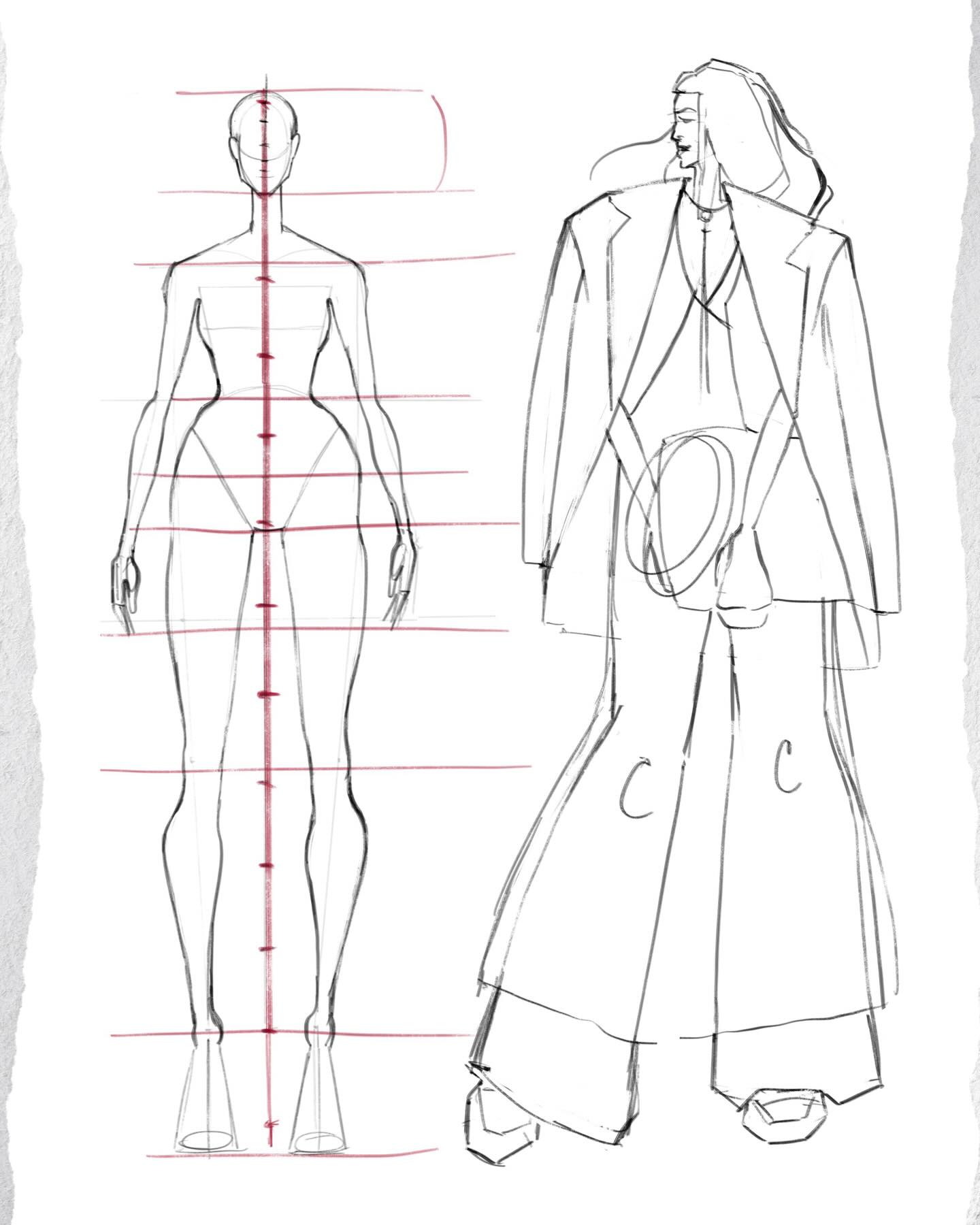
I really love this stage, because it is where the figure begins to breathe. The red guidelines and simplified mannequin forms help me understand not only anatomy, but also character. They tell me where the weight falls, where the fabric will pull, where the silhouette should open, and where softness should remain. Without this hidden groundwork, even the prettiest sketch can feel empty. With it, the drawing starts to hold presence.
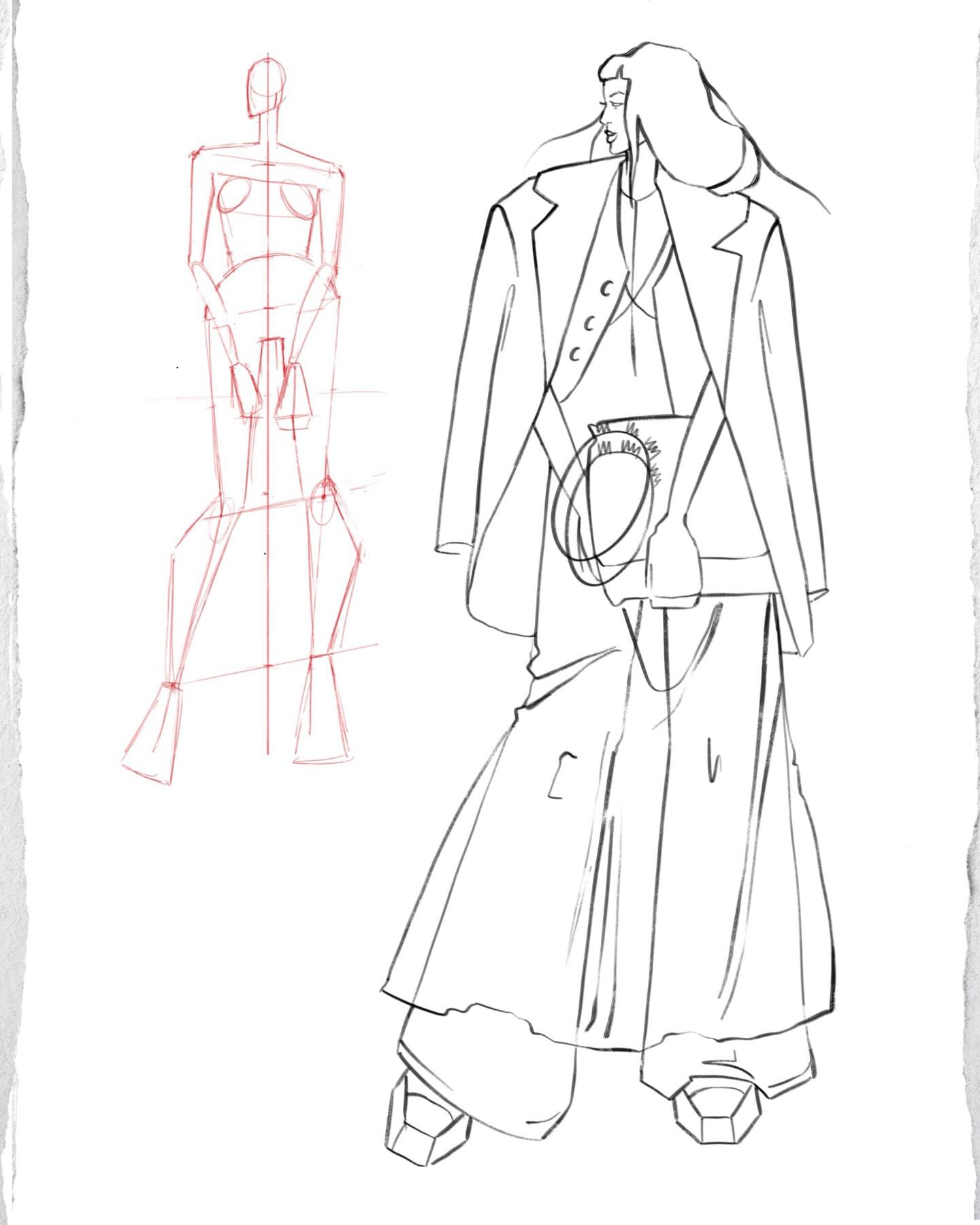
After that, the lines became more fluid, and the image slowly moved closer to Masha herself — her turn of the head, the softness of her hair, the oversized dark jacket, the lace, the denim, the slightly distant and self-contained mood. I did not want the illustration to feel loud. I wanted it to feel elegant, thoughtful, and a little fragile, like a memory of someone passing through light.
I love capturing the process I make. I usually never share 90% of it, but with right sparkle of inspiration & interest, I do enjoy sharing something with the audience around.
Find more in my Instagram account